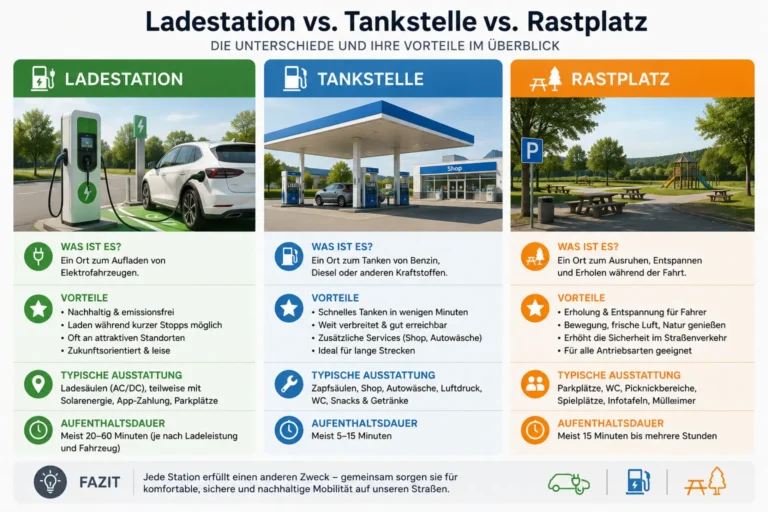
When traveling by car, many people wonder whether they need a Ladestation, Tankstelle, or Rastplatz. Each serves a different purpose. Knowing the difference helps you plan better trips and save time.
A Ladestation charges electric vehicles. A Tankstelle provides fuel for gasoline and diesel cars. A Rastplatz offers a safe place to rest during long journeys.
Many drivers use all three during different trips. However, choosing the right stop depends on your vehicle and your travel needs.
This guide explains each option in simple words. You will also learn the main differences, benefits, and when to use each one. By the end, you will know exactly which option fits your journey.
Quick Summary
- Ladestation charges electric vehicles (EVs).
- Tankstelle supplies gasoline, diesel, or other fuels.
- Rastplatz provides a place to rest during travel.
- EV drivers mainly use charging stations.
- Fuel-powered vehicles need gas stations.
- Every driver can benefit from rest areas.
- Long-distance trips often include more than one stop.
- Choosing the right option improves safety and convenience.
Ladestation vs. Tankstelle vs. Rastplatz at a Glance
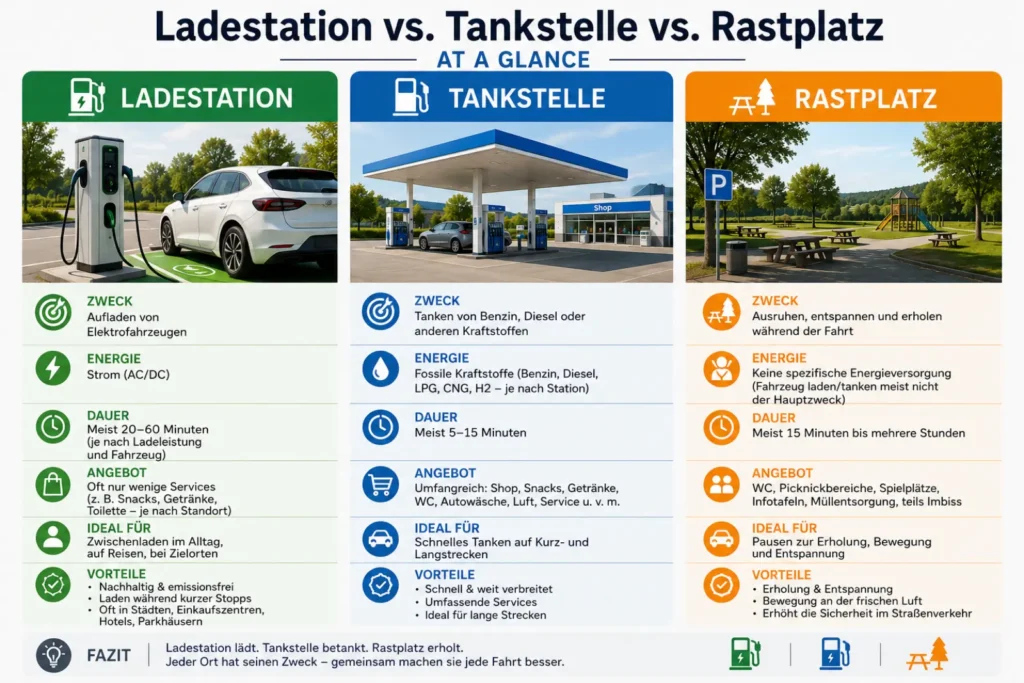
| Feature | Ladestation | Tankstelle | Rastplatz |
|---|---|---|---|
| Main Purpose | Charge electric vehicles | Refuel gasoline or diesel vehicles | Rest during travel |
| Best For | Electric cars | Fuel-powered cars | All travelers |
| Average Stop Time | 20–60 minutes | 5–10 minutes | Flexible |
| Food Available | Sometimes | Usually | Sometimes |
| Restrooms | Often available | Usually available | Usually available |
| Parking | Yes | Limited | Yes |
| Open 24/7 | Many locations | Most locations | Always accessible |
What Is a Ladestation?
A Ladestation is a charging station for electric vehicles. Instead of filling a fuel tank, it supplies electricity to recharge the car battery.
Charging stations come in different speeds. Fast chargers can recharge many vehicles within 30 minutes. Standard chargers usually take longer.
Many charging stations are located at shopping centers, highways, hotels, and parking areas. Some also include cafés and restrooms for travelers.
Common Uses
- Charging electric cars
- Long-distance EV travel
- Overnight charging
- Public parking facilities
What Is a Tankstelle?
A Tankstelle is a fuel station where drivers fill their vehicles with gasoline or diesel.
Most gas stations also sell snacks, drinks, coffee, and travel supplies. Many offer car wash services and air pumps for tires.
Fuel stations remain one of the most important stops for drivers of traditional vehicles.
Common Uses
- Refueling cars
- Buying travel essentials
- Using restrooms
- Car cleaning services
What Is a Rastplatz?
A Rastplatz is a roadside rest area designed for travelers. It gives drivers a safe place to stop, relax, and recover.
Unlike a gas station, a rest area may not offer fuel. Some provide picnic tables, playgrounds, walking paths, and public toilets.
Rest areas help reduce driver fatigue, making roads safer for everyone.
Common Uses
- Taking breaks
- Stretching legs
- Eating packed meals
- Resting before continuing the trip
Key Differences Between Ladestation, Tankstelle, and Rastplatz
Although these places are often found near highways, they serve different purposes.
Ladestation
- Designed for electric vehicles
- Provides battery charging
- Charging takes longer than refueling
Tankstelle
- Designed for gasoline and diesel vehicles
- Offers quick refueling
- Includes convenience stores and services
Rastplatz
- Designed for all travelers
- Focuses on rest and safety
- Usually does not provide fuel
Knowing these differences helps drivers choose the right stop
When Should You Choose a Ladestation?
Choose a charging station if you drive an electric vehicle.
A charging stop gives your battery enough power to continue your trip safely.
Many drivers combine charging with meals or shopping because charging takes more time than fueling.
Best Situations
- Road trips with an EV
- Low battery warning
- Overnight travel
- Destination charging
When Should You Choose a Tankstelle?
A gas station is the right choice for vehicles that use gasoline or diesel.
Fueling takes only a few minutes. Many stations also provide food, drinks, and emergency supplies.
Best Situations
- Low fuel level
- Long highway trips
- Buying snacks or drinks
- Vehicle maintenance needs
When Should You Choose a Rastplatz?
A rest area is best when you feel tired.
Experts recommend taking a break every two hours during long drives.
Even a short rest can improve focus and reduce accident risk.
Best Situations
- Feeling sleepy
- Family road trips
- Eating packed food
- Taking children or pets outside
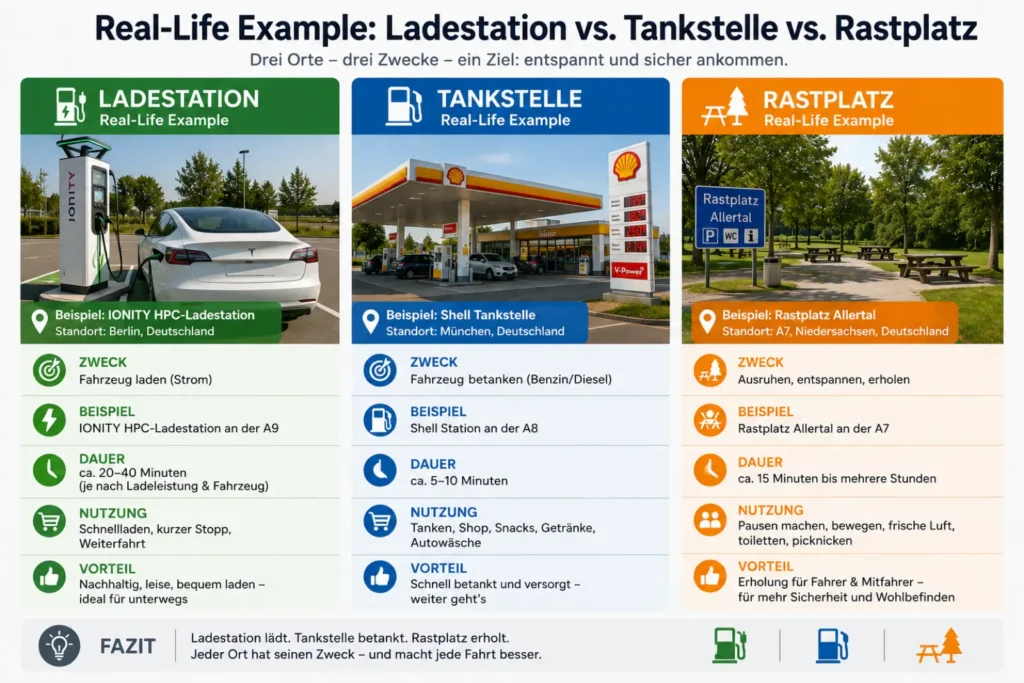
Real-Life Example
Imagine a family traveling 500 kilometers.
The father drives a gasoline car.
They stop at a Tankstelle to refuel and buy coffee.
Two hours later, everyone feels tired.
They stop at a Rastplatz to stretch, eat lunch, and let the children play.
Now imagine the same trip with an electric car.
Instead of visiting a gas station, the family stops at a Ladestation. While the car charges, they enjoy a meal before continuing the journey.
These examples show that each location serves a different purpose.
Pros and Cons of Ladestation, Tankstelle, and Rastplatz
Every option offers unique benefits. However, each also has a few limitations.
Ladestation
Pros
- Supports eco-friendly travel.
- Reduces carbon emissions.
- Many fast chargers save time.
- Available at shopping centers and highways.
- Ideal for electric vehicle owners.
Cons
- Charging usually takes longer than refueling.
- Some rural areas have fewer charging stations.
- Waiting times may occur during busy hours.
- Charging costs vary by provider.
Tankstelle
Pros
- Fast refueling in just a few minutes.
- Easy to find in most cities and highways.
- Offers food, drinks, and travel essentials.
- Many stations operate 24 hours.
Cons
- Fuel prices change often.
- Gasoline and diesel produce emissions.
- Busy stations may have long queues.
- Fuel costs can increase during peak travel seasons.
Rastplatz
Pros
- Helps reduce driver fatigue.
- Free to use in most locations.
- Offers parking and restrooms.
- Safe place to relax during long trips.
Cons
- Usually does not provide fuel.
- Food options may be limited.
- Some rest areas have fewer facilities.
- Popular locations can become crowded.
Which Option Is Best for Different Travelers?
The right choice depends on your vehicle and travel plans.
| Traveler | Best Choice | Reason |
|---|---|---|
| Electric vehicle owner | Ladestation | Recharge the battery |
| Gasoline or diesel driver | Tankstelle | Quick refueling |
| Long-distance traveler | Rastplatz | Rest and stay alert |
| Family with children | Rastplatz | Open space and picnic areas |
| Business traveler | Tankstelle | Fast stop and convenience store |
| Eco-conscious driver | Ladestation | Cleaner transportation |
Common Mistakes to Avoid
Many travelers make simple mistakes that affect their journey.
1. Waiting Too Long to Recharge
Electric vehicle drivers should not wait until the battery is almost empty.
2. Ignoring Fuel Levels
Traditional vehicles should refuel before the tank becomes critically low.
3. Skipping Rest Breaks
Driving while tired increases the risk of accidents.
4. Not Planning the Route
Always check where charging stations, gas stations, and rest areas are located before starting a long trip.
5. Choosing Convenience Over Safety
Do not continue driving if you feel sleepy. A short break is always worth it.
Tips for Better Travel Planning
Good planning makes every journey easier.
- Check your vehicle before leaving.
- Plan charging or fueling stops in advance.
- Keep drinking water in your vehicle.
- Take a break every two hours.
- Use navigation apps to locate nearby services.
- Carry emergency supplies for unexpected situations.
- Keep your phone charged during long trips.
These simple habits save time and improve safety.
Environmental Impact
The three options affect the environment differently.
Ladestation
Charging stations support electric mobility. When powered by renewable energy, they help reduce greenhouse gas emissions.
Tankstelle
Gas stations supply fossil fuels. These fuels produce carbon emissions when vehicles operate.
Rastplatz
Rest areas have very little direct environmental impact. They encourage safe driving and often include recycling bins and green spaces.
As electric vehicles become more common, charging infrastructure will continue to expand.
Synonyms and Related Keywords
Using related keywords helps readers understand the topic and improves SEO.
Ladestation
- EV charging station
- Electric vehicle charger
- Fast charging station
- Public charger
- EV charging point
Tankstelle
- Gas station
- Petrol station
- Fuel station
- Service station
- Filling station
Rastplatz
- Rest area
- Highway rest stop
- Motorway rest area
- Roadside rest area
- Travel rest stop
Related Search Terms
- Ladestation vs Tankstelle
- Tankstelle oder Rastplatz
- EV charging on highways
- Highway service stations
- Best rest areas for road trips
- Electric car travel guide
- Road trip planning tips
- Fuel station services
Expert Insights
Travel experts agree that choosing the right stop improves comfort, safety, and efficiency.
Electric vehicle owners should identify charging stations before beginning a long trip. This reduces stress and avoids unnecessary delays.
Drivers of gasoline and diesel vehicles should monitor fuel levels instead of waiting for warning lights.
Safety experts also recommend taking regular breaks. Even a 15-minute rest can improve concentration and reduce fatigue.
The best travel plans often combine all three options. A driver may recharge or refuel first and then stop at a nearby rest area to relax before continuing the journey.
(FAQs)
1. What is the difference between a Ladestation and a Tankstelle?
A Ladestation charges electric vehicles, while a Tankstelle provides gasoline or diesel for fuel-powered vehicles.
2. Can every driver use a Rastplatz?
Yes. Rest areas are open to all travelers, regardless of the type of vehicle.
3. Is charging an electric vehicle slower than refueling?
Yes. Even fast chargers usually take longer than filling a fuel tank.
4. Are charging stations available on highways?
Yes. Many highways now include fast charging stations for electric vehicles.
5. Should I stop at a Rastplatz even if I don’t need fuel?
Yes. Regular breaks help reduce fatigue and improve road safety.
6. Which option is the most environmentally friendly?
A Ladestation is generally the most eco-friendly choice, especially when it uses renewable electricity.
7. Can a Tankstelle also have a charging station?
Yes. Many modern fuel stations now include EV charging points alongside traditional fuel pumps.
Conclusion
Understanding the difference between a Ladestation, Tankstelle, and Rastplatz makes every trip easier. Each location meets a different travel need. Charging stations power electric vehicles. Gas stations provide fuel for traditional cars. Rest areas help drivers stay alert and refreshed.
Before your next journey, plan where you will stop for charging, refueling, or resting. A well-planned route reduces stress, improves safety, and saves valuable time. Whether you drive an electric car or a fuel-powered vehicle, knowing when to use each option helps you enjoy a smoother and more comfortable travel experience.