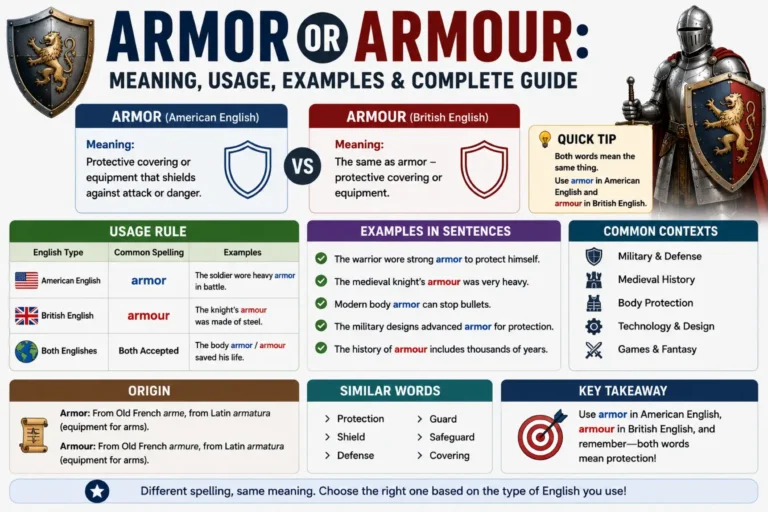
Armor or armour is a common question for writers, students, gamers, and history lovers. Many people wonder if these words have different meanings. The simple answer is that they mean the same thing. The only difference is the spelling.
American English uses armor, while British English uses armour. Both words describe protective clothing or equipment that keeps people safe from harm. Today, the word also appears in military, sports, gaming, and technology.
This guide explains the meaning of armor or armour in simple words. You will also learn when to use each spelling, common mistakes to avoid, and real-life examples. By the end, you will know which version fits your audience.
Quick Summary
- Armor is the American English spelling.
- Armour is the British English spelling.
- Both words have the same meaning.
- They refer to protective clothing or equipment.
- Choose the spelling based on your audience.
- Neither spelling is wrong.
What Does Armor or Armour Mean?
Armor or armour means protective equipment that helps prevent injuries.
People have used armor for thousands of years. Ancient soldiers wore metal plates, leather, or chain mail during battles. Modern armor includes body armor, helmets, shields, and protective gear.
Simple definition:
Armor or armour is protective clothing or equipment designed to reduce damage from attacks or accidents.
Armor vs Armour: What’s the Difference?
The biggest difference is spelling.
| Feature | Armor | Armour |
|---|---|---|
| English Style | American English | British English |
| Meaning | Protective equipment | Protective equipment |
| Pronunciation | Same | Same |
| Usage | USA | UK, Canada, Australia, New Zealand |
| Correct? | Yes | Yes |
There is no difference in meaning.
Why Are There Two Spellings?
English changed over many centuries.
American English simplified many spellings.
Examples include:
- Color → Colour
- Honor → Honour
- Favor → Favour
- Armor → Armour
British English kept the traditional spellings.
Types of Armor or Armour
There are many kinds of protective armor.
Medieval Armor
Knights wore steel suits during battles.
Examples include:
- Plate armor
- Chain mail
- Helmets
- Shields
Modern Military Armor
Soldiers wear advanced protective gear.
Examples include:
- Bulletproof vests
- Combat helmets
- Tactical body armor
Sports Armor
Athletes wear protective equipment.
Examples include:
- Football pads
- Cricket helmets
- Hockey gear
- Motorcycle armor
Vehicle Armor
Many vehicles include armor.
Examples include:
- Military tanks
- Armored trucks
- Security vehicles
Real-Life Examples
Here are simple examples.
- Soldiers wear body armor for protection.
- Knights wore heavy armor during medieval wars.
- Police officers wear protective armor.
- Hockey players wear armor to reduce injuries.
- Military vehicles use armored steel.
Armor in Gaming
Gamers often hear the word armor.
Armor protects characters from damage.
Popular games with armor systems include:
- Minecraft
- Elden Ring
- Skyrim
- World of Warcraft
- Diablo
Better armor usually means stronger defense.
Armor in Technology
The word armor also appears in technology.
Examples include:
- Armored fiber optic cables
- Armored electrical cables
- Phone cases with armor protection
- Rugged laptop covers
These products protect devices from damage.

Common Mistakes
Many people make simple mistakes.
Mixing Both Spellings
Do not write:
“The soldier wore armour and upgraded his armor.”
Choose one spelling style.
Using the Wrong Version
If writing for an American audience, use armor.
If writing for a British audience, use armour.
Thinking They Have Different Meanings
Both words mean exactly the same thing.
Tips for Using Armor or Armour Correctly
Follow these simple tips.
- Know your audience.
- Stay consistent.
- Follow your style guide.
- Use American spelling for US readers.
- Use British spelling for UK readers.
Consistency improves readability.
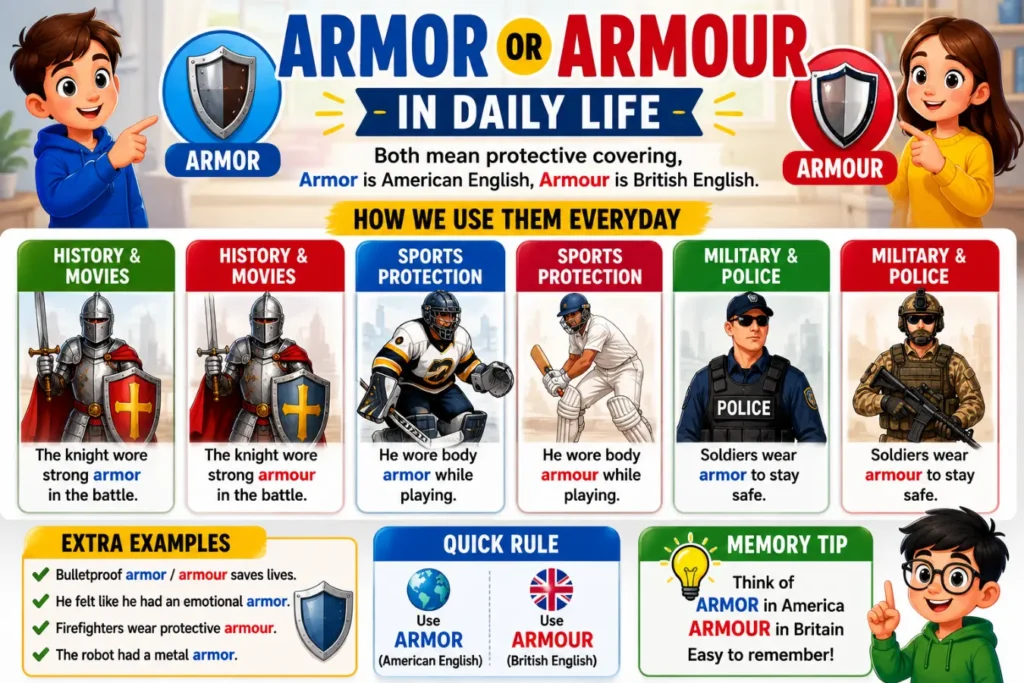
Armor or Armour in Daily Life
Most people think armor belongs only in history.
That is not true.
You see armor every day.
Examples include:
- Bicycle helmets
- Construction helmets
- Sports pads
- Motorcycle jackets
- Bulletproof vests
- Firefighter gear
All these items provide protection.
Synonyms and Related Words
Here are common alternatives.
Synonyms
- Protection
- Shield
- Defensive gear
- Protective clothing
- Body protection
- Safety equipment
- Protective wear
Related Keywords (LSI)
- body armor
- protective gear
- bulletproof vest
- medieval armor
- knight armor
- military armor
- tactical armor
- armored vehicle
- combat gear
- protective equipment
Expert Insights
Language experts agree that armor and armour are equally correct.
The only difference is regional spelling.
SEO writers should match the spelling to their target audience.
Businesses targeting American customers should use armor consistently.
Websites targeting UK visitors should use armour.
This improves user experience and search relevance.
Frequently Asked Questions
Is armor and armour the same?
Yes. They have the same meaning.
Which spelling is correct?
Both spellings are correct.
Why do Americans write armor?
American English removed many extra letters from older British spellings.
Which countries use armour?
The UK, Canada, Australia, New Zealand, and many Commonwealth countries.
Which spelling should I use for SEO?
Use the version your audience searches most often.
Is body armor different from armor?
Body armor is one specific type of armor worn by people.
Does Google treat armor and armour differently?
Google understands both spellings. However, local search results often favor the regional spelling.
Common Search Terms
People also search for:
- armor meaning
- armour meaning
- armor vs armour
- body armor
- medieval armor
- knight armor
- tactical armor
- military armor
- armored vehicles
- protective equipment
Conclusion
Understanding armor or armour is simple once you know the difference. Both words describe protective clothing or equipment that helps reduce injury. The only real distinction is regional spelling. American English prefers armor, while British English uses armour.
Whether you are writing an article, creating game content, studying history, or improving your English, choosing the correct spelling for your audience makes your writing look professional. Stay consistent throughout your content, use related keywords naturally, and focus on clarity. Doing so improves readability, supports SEO, and helps readers find the information they need.