
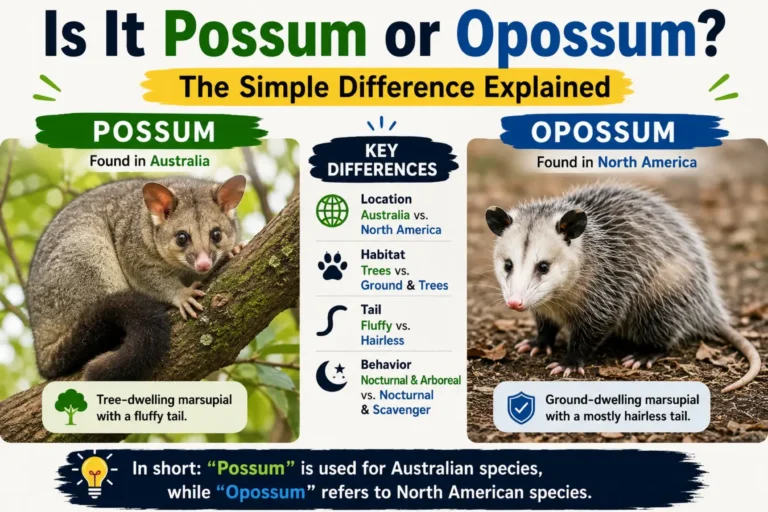
Is it possum or opossum? Many people ask this question when they see these animals in books, videos, or news stories. The words sound similar, but they do not always mean the same thing.
In North America, the correct animal name is usually opossum. However, many people shorten the word and simply say possum.
Things become more confusing because Australia has real animals called possums. Although they belong to the same marsupial group, they are different species.
This guide explains the difference in simple words. You will learn the meanings, see examples, avoid common mistakes, and understand which word to use in daily life.
Quick Summary Box
- Opossum is the official name of the North American animal.
- Many Americans casually say possum instead of opossum.
- Australia has animals officially called possums.
- Opossums and possums are related marsupials.
- They are different species.
- Both words can be correct depending on location.
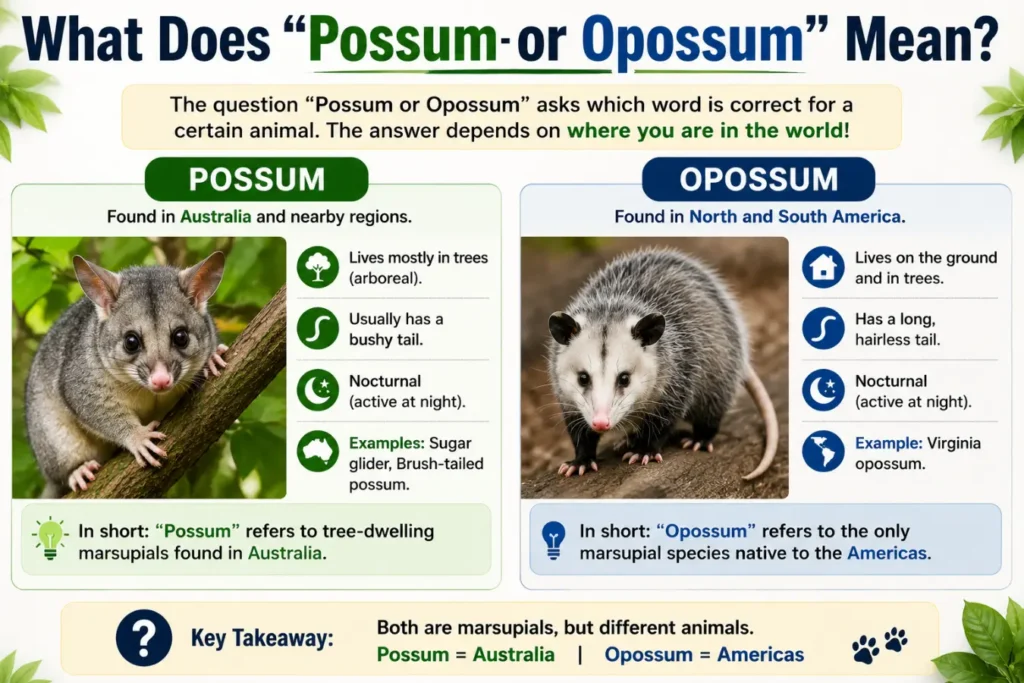
What Does “Possum or Opossum” Mean?
The question asks whether the animal should be called a possum or an opossum.
The answer depends on where you live.
- In North America, the animal is an opossum.
- In Australia and nearby regions, the animal is a possum.
Many Americans use both words when talking about the same creature.
What Is an Opossum?
An opossum is a marsupial native to North and South America.
Characteristics include:
- Gray fur
- Long tail
- Sharp teeth
- Nighttime activity
- Ability to “play dead”
The Virginia opossum is the only opossum species found naturally in the United States and Canada.
What Is a Possum?
A possum is a different marsupial found mainly in:
- Australia
- New Zealand
- Papua New Guinea
Possums often have:
- Thick fur
- Large eyes
- Bushy tails
- Tree-climbing abilities
Unlike opossums, many possums spend most of their lives in trees.
Possum vs Opossum Comparison Table
| Feature | Opossum | Possum |
|---|---|---|
| Main location | North America | Australia |
| Scientific group | Didelphidae | Phalangeridae |
| Tail | Hairless | Usually furry |
| Habitat | Ground and trees | Mostly trees |
| Common nickname | Possum | Possum |
| Plays dead | Yes | Rarely |
| Official name | Opossum | Possum |
Why Do Americans Say “Possum”?
People often shorten words during conversation.
For example:
- Refrigerator → Fridge
- Advertisement → Ad
- Opossum → Possum
Because of this habit, many Americans simply say:
- “A possum crossed the road.”
- “There is a possum in my yard.”
Even though the official name is opossum, the shortened version has become common.
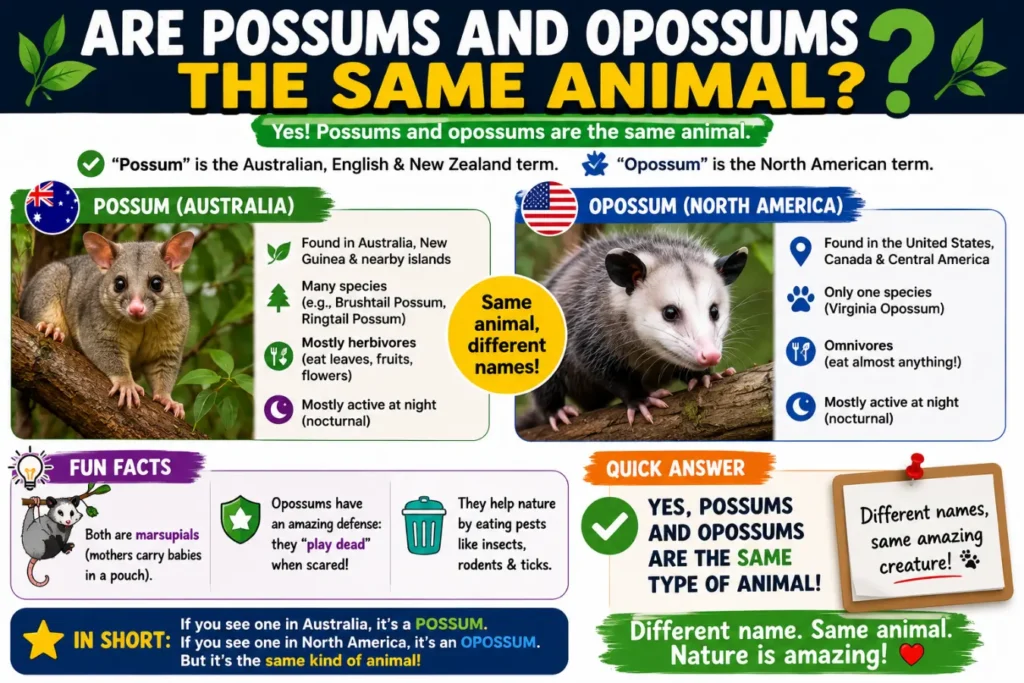
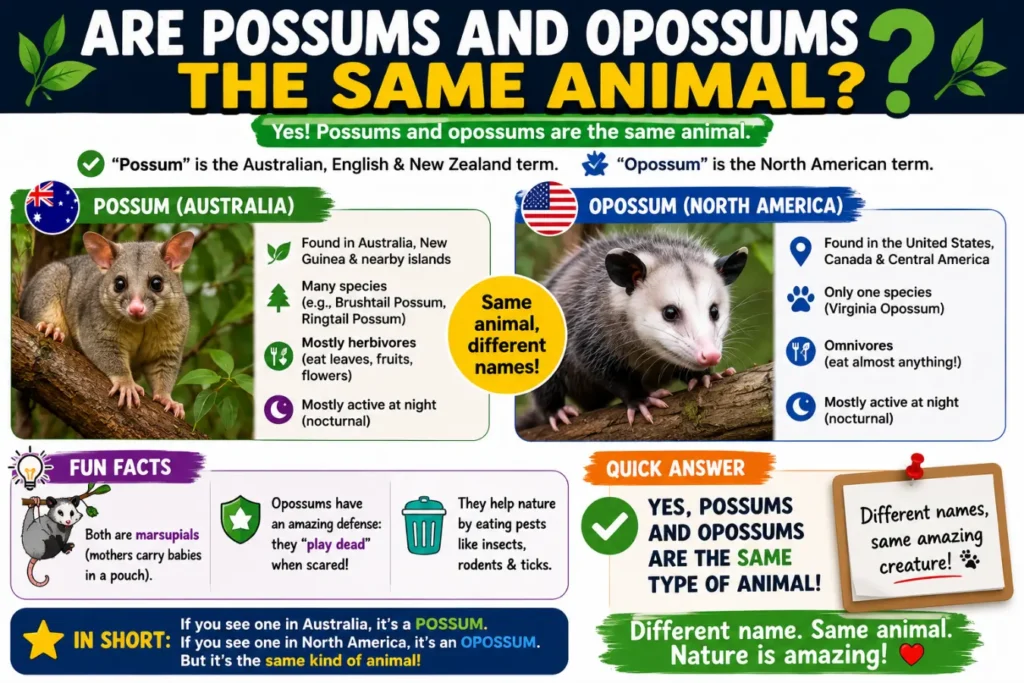
Are Possums and Opossums the Same Animal?
Not exactly.
They belong to different families.
However, they share some similarities because both are marsupials.
Both animals:
- Carry babies in pouches.
- Eat many types of food.
- Live mostly at night.
Still, scientists classify them as different animals.
Real-Life Examples
Example 1: United States
“I found an opossum under my porch.”
Many Americans may also say:
“I found a possum under my porch.”
Example 2: Australia
“We saw a possum in the tree outside.”
In Australia, “opossum” would sound unusual.
Example 3: Wildlife Articles
Scientific articles usually use the official names.
Common Mistakes People Make
Mistake 1: Thinking Both Animals Are Identical
They are related but not the same species.
Mistake 2: Assuming “Possum” Is Always Wrong
In America, possum works as a common nickname.
Mistake 3: Using Opossum for Australian Animals
Australian species are officially called possums.
Mistake 4: Ignoring Location
The country often determines which word sounds natural.
How to Remember the Difference
Use these simple tricks.
North America = Opossum
Think of the animal that plays dead.
Australia = Possum
Think of tree-dwelling animals with fluffy tails.
Casual American Speech = Possum
People often drop the first “O.”
Usage in Daily Life
You may hear these words in:
- Movies
- Wildlife documentaries
- News reports
- Social media posts
- School lessons
- Everyday conversations
Examples:
- “A possum got into the trash.”
- “The opossum climbed the fence.”
- “Australian possums are very cute.”
Why Do Opossums Play Dead?
When threatened, opossums sometimes enter a defensive state called “playing possum.”
During this behavior, they:
- Fall over.
- Stay motionless.
- Release a bad smell.
- Fool predators.
This natural defense inspired the phrase:
“Playing possum.”
Synonyms and Related Keywords
Related Search Terms
- possum meaning
- opossum meaning
- possum vs opossum
- difference between possum and opossum
- are possums dangerous
- are opossums marsupials
- Australian possum
- North American opossum
Semantic Keywords
- marsupial animals
- Virginia opossum
- nocturnal mammals
- wildlife species
- pouch mammals
Expert Insight
Wildlife experts recommend using official names when accuracy matters.
Use opossum in:
- Research papers
- Educational content
- Scientific articles
Use possum when speaking casually with Americans.
Understanding the difference helps writers create more accurate content and improves communication.
Frequently Asked Questions
Is possum short for opossum?
Yes. Many Americans shorten opossum to possum.
Is an opossum the same as a possum?
Not exactly. They belong to different animal families.
Which word is correct in the United States?
Opossum is officially correct.
Why do people say “playing possum”?
The phrase comes from the opossum’s defense behavior.
Do Australian possums play dead?
Not commonly.
Are possums dangerous?
Most possums and opossums avoid people.
Is a possum a rodent?
No. Possums and opossums are marsupials.
Which spelling should I use in formal writing?
Use the official name for the species you mean.
Conclusion
The answer to is it possum or opossum depends on where you are and which animal you mean.
In North America, the official name is opossum, although many people casually say possum. In Australia, possum is the correct name for native species.
Both animals belong to the marsupial family, but scientists classify them separately.
The easiest rule to remember is simple:
North America uses opossum. Australia uses possum.
Knowing the difference helps you speak and write with confidence.

