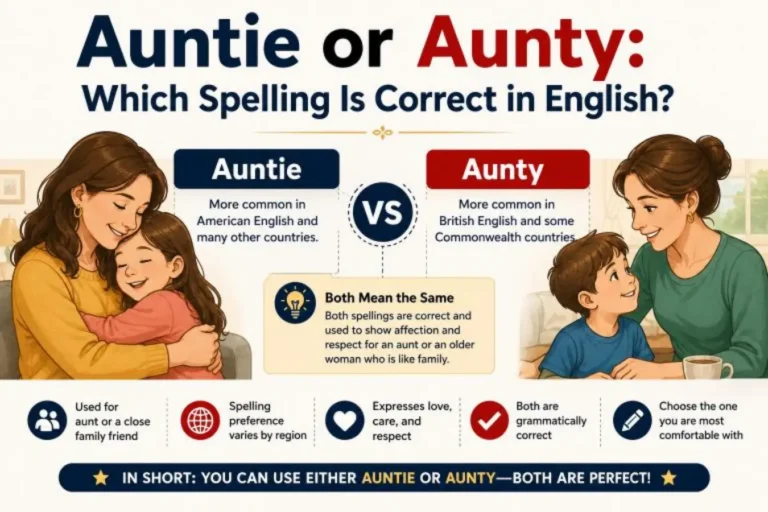
Auntie or aunty is a question many English learners and writers ask. Both spellings are correct. However, their usage depends on region, style, and personal preference.
People often see both words in books, social media posts, and family conversations. This creates confusion.
The good news is that both versions mean the same thing. They refer to an aunt or an older woman who is close to the family.
In this guide, you will learn the difference between auntie and aunty, when to use each spelling, and common mistakes to avoid.
By the end, choosing the right word will become easy.
Quick Summary Box
- Auntie and aunty have the same meaning.
- Both spellings are grammatically correct.
- Auntie is more common worldwide.
- Aunty is popular in British English and some Commonwealth countries.
- Both words show affection and familiarity.
- Usage often depends on personal preference and location.
What Does Auntie or Aunty Mean?
Both words refer to:
- Your parent’s sister.
- Your uncle’s wife.
- A close family friend.
- An older woman treated like family.
These words sound warm and affectionate.
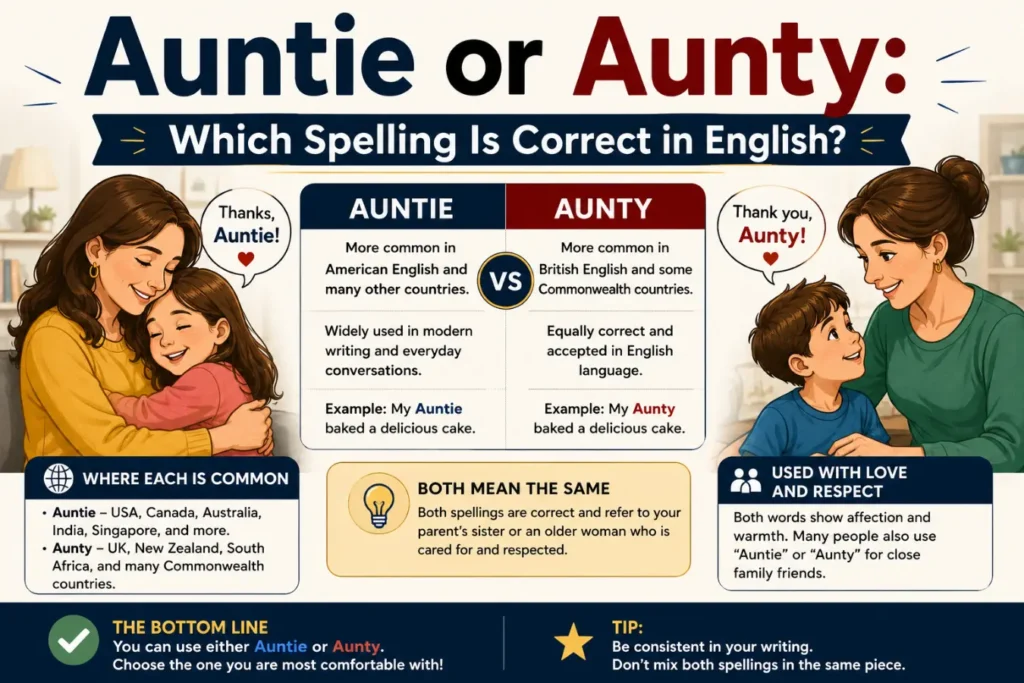
Simple Definition of Auntie and Aunty
Auntie/Aunty is an informal and loving way to say aunt.
Examples:
- Auntie Sarah baked cookies for us.
- Aunty Jane visited during the holidays.
The meaning stays exactly the same.
Is Auntie or Aunty Correct?
Yes. Both are correct.
Neither spelling is wrong.
Writers choose based on:
- Country
- Personal style
- Family tradition
- Audience preference
Auntie vs Aunty Comparison Table
| Feature | Auntie | Aunty |
|---|---|---|
| Meaning | Parent’s sister or close older woman | Same meaning |
| Grammar | Correct | Correct |
| Popularity | More common globally | Less common worldwide |
| American English | Preferred | Rare |
| British English | Common | Common |
| Tone | Warm and affectionate | Warm and affectionate |
Which Spelling Is More Popular?
Auntie appears more often online and in modern writing.
Many countries prefer:
- United States → Auntie
- Canada → Auntie
- Australia → Both
- United Kingdom → Both
- New Zealand → Both
- India → Auntie
- South Africa → Often Aunty
Popularity can vary by region.
Why Do Some People Use Aunty?
Some countries traditionally use aunty.
In many cultures, people call respected older women “Aunty” even without a family relationship.
For example:
- Aunty Maria next door helped us.
- Everyone called her Aunty Rose.
This usage shows love and respect.
Real-Life Examples of Auntie and Aunty
Family Example
“My Auntie Emma sent me a birthday gift.”
Community Example
“Aunty Linda taught us traditional recipes.”
School Example
“Many children called the daycare owner Auntie.”
Cultural Example
“In some cultures, older women are called Aunty out of respect.”
Aunt vs Auntie vs Aunty
| Word | Meaning | Formality |
| Aunt | Standard family term | Formal |
| Auntie | Affectionate nickname | Informal |
| Aunty | Affectionate nickname | Informal |
People usually use aunt in official documents.
Family conversations often use auntie or aunty.
Usage in Daily Life
People use these words when:
- Greeting relatives
- Introducing family friends
- Speaking to children
- Showing respect to elders
- Writing birthday cards
Examples:
- Thank you, Auntie Mary.
- Aunty Lisa made dinner.
- We visited Auntie Anne last weekend.
Common Mistakes People Make
Mistake 1: Thinking One Spelling Is Wrong
Both spellings are acceptable.
Mistake 2: Mixing Styles
Choose one spelling and stay consistent.
Mistake 3: Using Auntie in Formal Documents
Official papers usually use:
Aunt Sarah Johnson
instead of:
Auntie Sarah Johnson
Mistake 4: Assuming Every Country Uses the Same Version
Language preferences differ around the world.
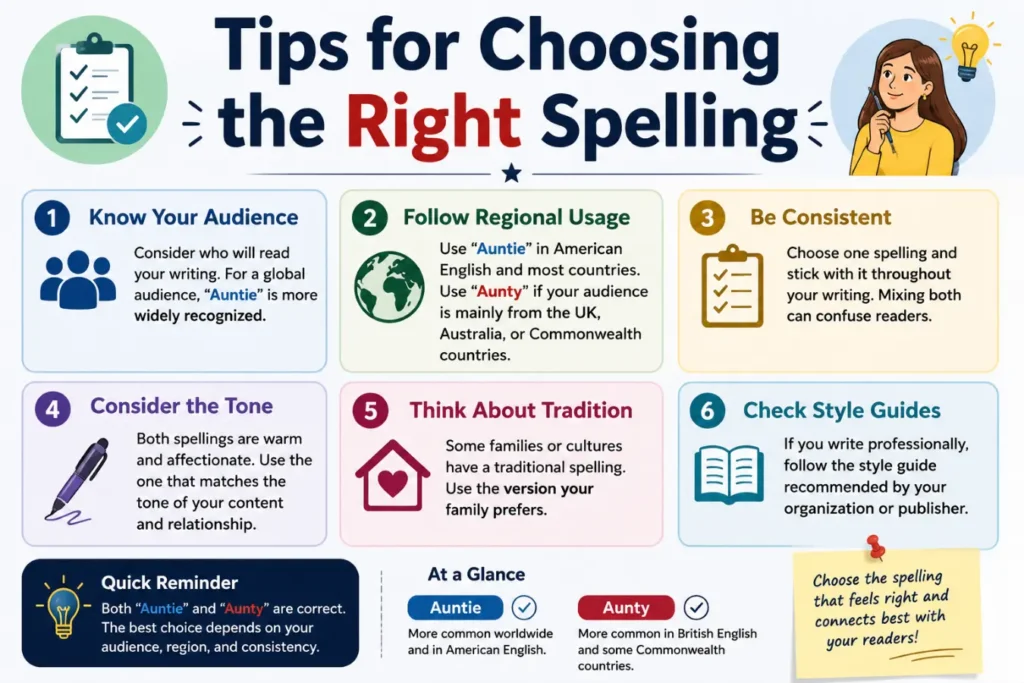
Tips for Choosing the Right Spelling
Use Auntie for Global Readers
This spelling is easier for international audiences.
Follow Local Style
Match the spelling common in your country.
Stay Consistent
Avoid switching between auntie and aunty in the same article.
Consider Your Audience
Family blogs often sound more natural with affectionate terms.
Synonyms and Related Words
Synonyms
- Aunt
- Relative
- Family member
- Guardian figure
- Elder woman
LSI Keywords
- auntie meaning
- aunty meaning
- auntie vs aunty
- how to spell auntie
- is aunty correct
- affectionate family names
- aunt nickname
- family titles
Why Do Children Say Auntie?
Children often learn affectionate names first.
Words like:
- Mommy
- Daddy
- Grandma
- Auntie
feel friendly and easy to pronounce.
Because of this, many families continue using these names into adulthood.
Cultural Importance of Auntie and Aunty
In many cultures, these words extend beyond blood relatives.
People may call:
- Neighbors
- Family friends
- Teachers
- Community elders
“Auntie” or “Aunty” as a sign of respect.
This practice strengthens social bonds.
Expert Insight
Language experts agree that both spellings are valid.
However, consistency matters more than the specific spelling.
For websites targeting international readers, auntie often performs better because it is searched more frequently.
Writers should always consider their audience and cultural context.
Frequently Asked Questions
Is auntie or aunty correct?
Both spellings are correct.
Which is more common, auntie or aunty?
Auntie is generally more popular worldwide.
Is aunty used in British English?
Yes. British English commonly accepts both forms.
Is auntie informal?
Yes. It is an affectionate version of “aunt.”
Can I call a family friend auntie?
Yes. Many cultures do this.
Is aunt used in official documents?
Yes. Formal documents usually use “aunt.”
Do auntie and aunty have different meanings?
No. They mean exactly the same thing.
Which spelling should bloggers use?
Most international blogs prefer “auntie.”
Conclusion
The debate over auntie or aunty is simpler than many people think. Both spellings are correct and share the same meaning.
The choice usually depends on region, family tradition, and personal preference. While auntie is more common globally, aunty remains popular in many English-speaking countries.
Neither version is wrong.
The most important rule is consistency. Choose the spelling that fits your audience and use it throughout your writing.
In everyday life, both words express warmth, love, and respect. That matters far more than the spelling itself.