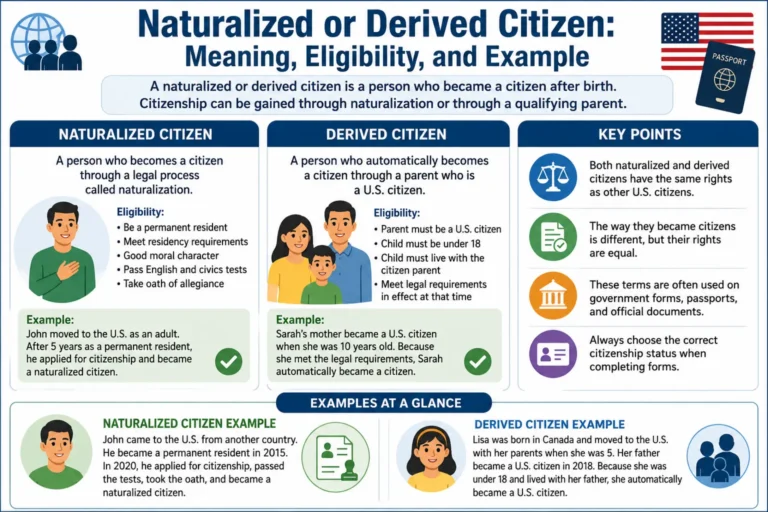
A naturalized or derived citizen is a person who became a U.S. citizen after birth through a legal process. Many people confuse naturalized citizenship with derived citizenship. However, they are different in important ways.
Understanding these terms helps with immigration forms, passports, jobs, and legal documents. It also helps people answer citizenship questions correctly.
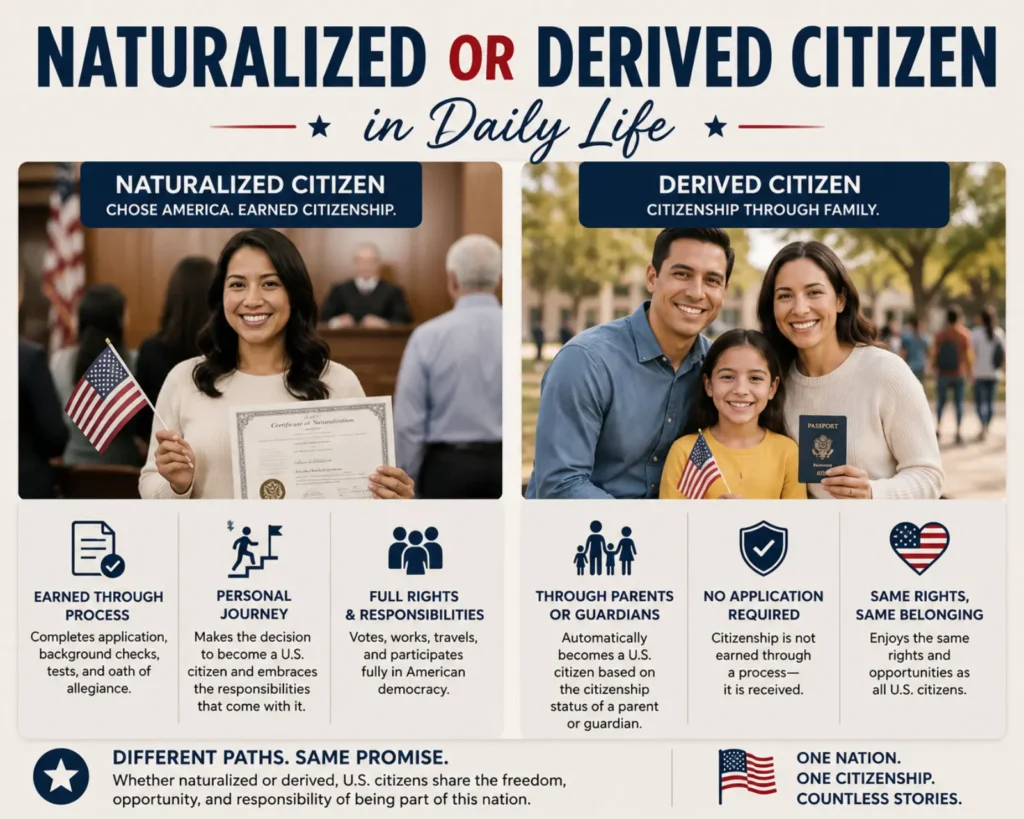
In simple terms, a naturalized citizen becomes a citizen through an application process. A derived citizen receives citizenship through a parent who became a citizen.
This guide explains everything in easy language. You will learn the meaning, examples, differences, benefits, and common mistakes. By the end, you will clearly understand what a naturalized or derived citizen is and why it matters.
Quick Summary Box
- A naturalized or derived citizen gains citizenship after birth.
- Naturalized citizens complete a legal citizenship process.
- Derived citizens receive citizenship through eligible parents.
- Both have the same rights as citizens born in the country.
- The path to citizenship is different for each group.
- Citizenship status may affect legal paperwork and applications.
- Understanding the difference helps avoid errors on official forms.
What Is a Naturalized or Derived Citizen?
A naturalized or derived citizen is someone who was not born a citizen but later became one.
There are two main categories:
- Naturalized citizen
- Derived citizen
Both groups enjoy the same citizenship rights. However, they gain citizenship in different ways.
The distinction often appears on government forms, passport applications, and immigration records.
Meaning of a Naturalized Citizen
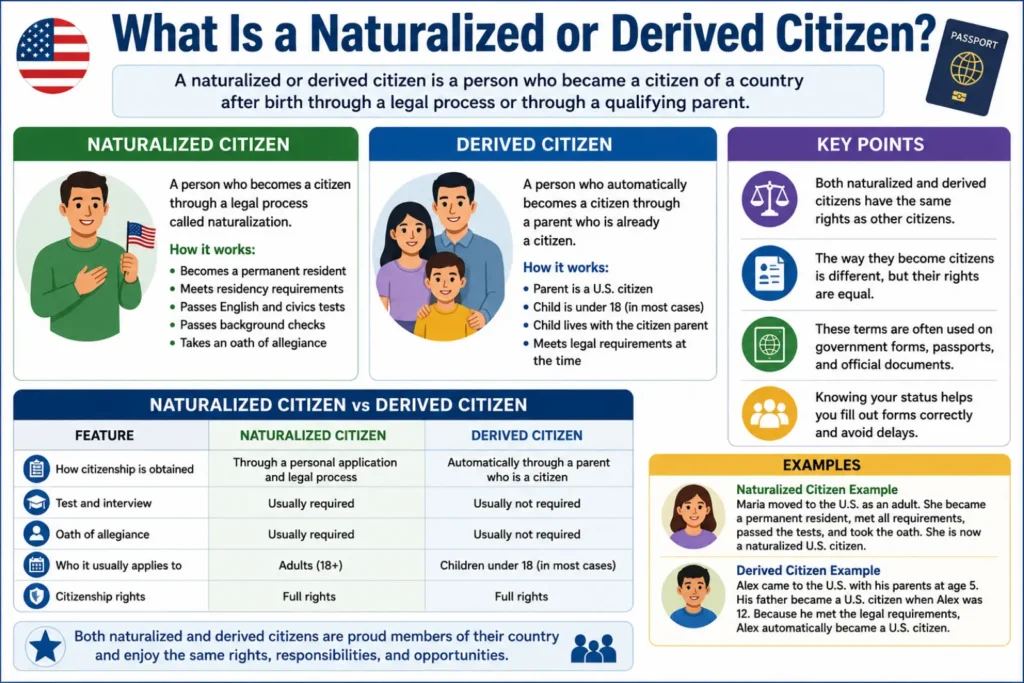
A naturalized citizen is a person who completes a country’s legal citizenship process.
For example, in the United States, a permanent resident may apply for citizenship after meeting eligibility requirements.
The process usually includes:
- Meeting residency requirements
- Filing an application
- Passing interviews
- Completing background checks
- Taking an oath of allegiance
After approval, the person becomes a naturalized citizen.
Example
Maria moved to the United States as an adult. She became a permanent resident. Five years later, she applied for citizenship and passed the required tests. She is now a naturalized citizen.
Meaning of a Derived Citizen
A derived citizen receives citizenship through a parent.
The child does not usually complete the standard naturalization process.
Instead, citizenship automatically transfers when specific legal conditions are met.
These conditions often include:
- Parent becomes a citizen
- Child is under a certain age
- Child lives with the citizen parent
- Child has lawful status
Example
Ahmed moved to the United States as a child with his parents. His mother later became a citizen. Because he met legal requirements, he automatically gained citizenship through her. He became a derived citizen.
Naturalized Citizen vs Derived Citize
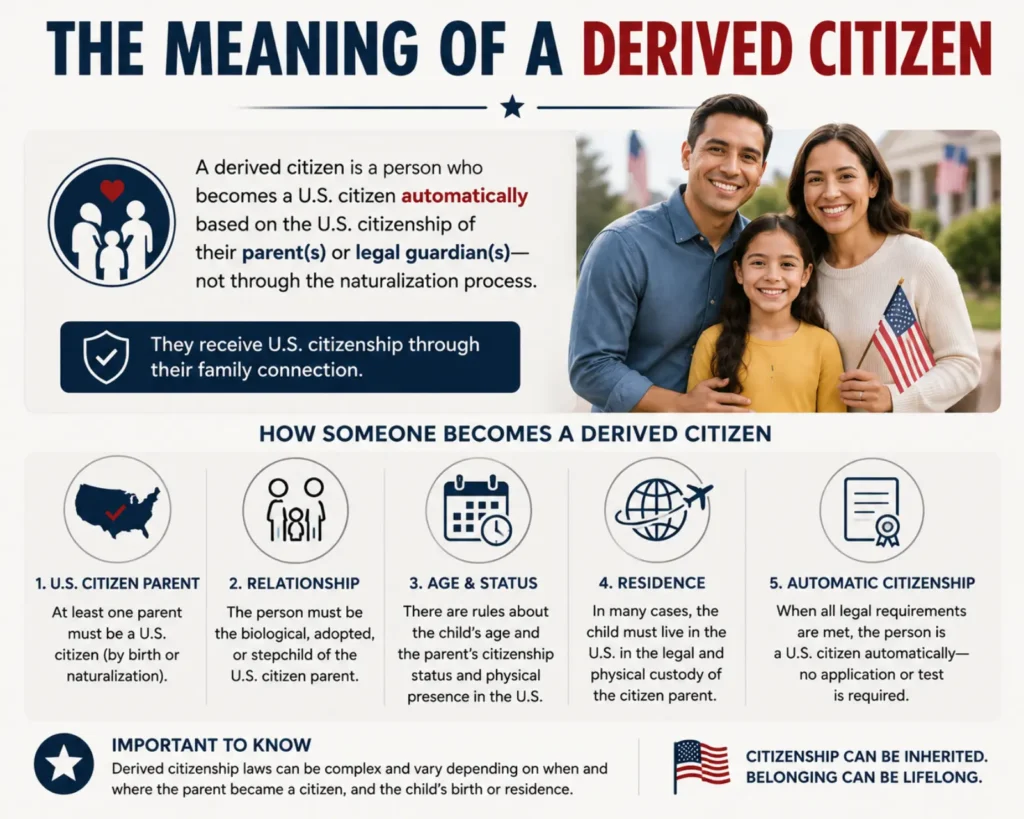
Many people ask whether naturalized and derived citizenship are the same.
Both result in citizenship. However, the path is different.
| Feature | Naturalized Citizen | Derived Citizen |
|---|---|---|
| Citizenship obtained through | Personal application | Parent’s citizenship |
| Citizenship test | Usually required | Usually not required |
| Oath ceremony | Required in many cases | Often not required |
| Age factor | Adults commonly apply | Usually applies to children |
| Application process | Direct process | Automatic under qualifying conditions |
| Citizenship rights | Full rights | Full rights |
The outcome is the same. Both individuals become full citizens.
How Does Naturalization Work?
Naturalization follows a structured legal process.
Typical Steps
- Become a permanent resident.
- Meet residency requirements.
- Submit citizenship application.
- Attend biometrics appointment.
- Complete interview.
- Pass required tests.
- Take citizenship oath.
After these steps, citizenship becomes official.
How Does Derived Citizenship Work?
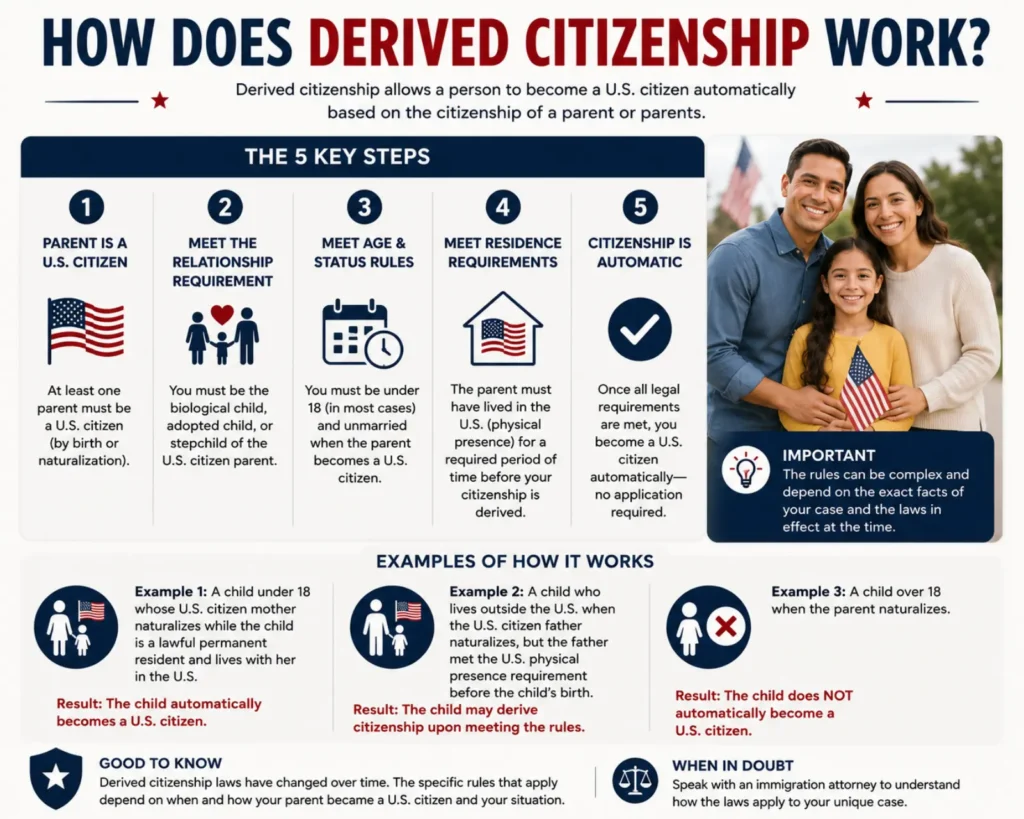
Derived citizenship usually happens automatically.
A child may become a citizen when:
- A parent becomes a citizen.
- Legal residency requirements are met.
- The child is below the age limit.
- The child lives with the qualifying parent.
The exact rules depend on citizenship laws in effect at the time.
Because laws change, people should verify eligibility carefully.
Example 1: Naturalized Citizen
Carlos immigrated as an adult. He became a permanent resident and later applied for citizenship. He passed the interview and oath ceremony. He became a naturalized citizen.
Example 2: Derived Citizen
Sophia moved to the country at age 10. Her father became a citizen when she was 14. Because she met legal requirements, she automatically became a citizen.
Example 3: Family Scenario
A family immigrates together. Parents later naturalize. Their younger child derives citizenship through them. The parents are naturalized citizens, while the child is a derived citizen.
Why Citizenship Status Matters
Citizenship status affects many important situations.
These include:
- Passport applications
- Government forms
- Employment verification
- Security clearances
- Immigration petitions
- Travel documentation
Providing the correct citizenship category helps prevent delays.
Common Mistakes People Make
Many people misunderstand citizenship terms.
Mistake 1: Assuming Both Terms Mean the Same Thing
The end result is the same. However, the legal path differs.
Mistake 2: Selecting the Wrong Option on Forms
Some forms ask whether citizenship is naturalized, derived, or acquired.
Always choose the correct category.
Mistake 3: Assuming Citizenship Is Automatic
Not every child automatically receives derived citizenship.
Specific legal requirements must apply.
Mistake 4: Losing Citizenship Documents
Citizenship records are important.
Store copies in a secure place.
Benefits of Being a Naturalized or Derived Citizen
Citizenship provides important advantages.
Key Benefits
- Right to vote (where applicable)
- Access to a passport
- Greater travel flexibility
- Protection under citizenship laws
- Eligibility for government opportunities
- Ability to sponsor eligible family members
These benefits generally apply equally to naturalized and derived citizens.
Tips for Verifying Citizenship Status
If you are unsure about your citizenship category, follow these tips.
Review Official Documents
Check:
- Citizenship certificate
- Passport records
- Immigration documents
Understand Family History
Derived citizenship often depends on parental citizenship records.
Seek Legal Guidance
Complex cases may require professional advice.
Keep Records Organized
Save copies of important citizenship documents.
Naturalized or Derived Citizen in Daily Life
Most citizens rarely think about their citizenship category.
However, it may appear when:
- Applying for jobs
- Requesting passports
- Completing government paperwork
- Applying for benefits
- Handling immigration matters
Knowing your status can save time and reduce confusion.
Synonyms and Related Terms
Search engines associate several related terms with this topic.
Related Keywords
- naturalized citizen
- derived citizen
- citizenship through parents
- citizenship by naturalization
- automatic citizenship
- citizenship status
- proof of citizenship
- citizen by derivation
- citizenship certificate
- immigration citizenship process
Long-Tail Keywords
- what is a naturalized or derived citizen
- difference between naturalized and derived citizen
- how to know if I am a derived citizen
- derived citizenship through parents
- naturalized citizen meaning explained
- citizenship by derivation examples
Expert Insights: Why Understanding Citizenship Categories Matters
Citizenship categories play a major role in legal documentation.
Experts recommend understanding your citizenship history before completing official forms.
Incorrect answers can create delays during:
- Passport applications
- Immigration filings
- Employment verification
The strongest approach is to maintain accurate records and verify information before submitting applications.
Understanding whether you are a naturalized or derived citizen helps ensure legal accuracy and smoother processing.
Frequently Asked Questions
What is a naturalized or derived citizen?
It is a person who became a citizen after birth through naturalization or through a qualifying parent.
Is a derived citizen the same as a naturalized citizen?
No. Both become citizens, but they gain citizenship through different legal paths.
Can a child automatically become a citizen?
In some cases, yes. The child must meet specific legal requirements.
Do derived citizens take a citizenship test?
Usually no. Citizenship often transfers through a qualifying parent.
Do naturalized citizens have the same rights as other citizens?
Yes. They generally have the same rights and responsibilities.
How can I prove my citizenship status?
Official documents such as citizenship certificates and passports can provide proof.
Can citizenship laws change?
Yes. Citizenship laws may change over time. Always verify current legal requirements.
Why do government forms ask about citizenship type?
The information helps agencies maintain
Conclusion
Understanding the term naturalized or derived citizen is important for completing legal forms, applying for passports, and knowing your citizenship status. While both naturalized and derived citizens enjoy the same rights and protections, they become citizens through different paths. A naturalized citizen gains citizenship through a legal application process, while a derived citizen receives citizenship through a qualifying parent.
Knowing the difference can help prevent mistakes on official documents and make immigration-related matters easier to manage. If you are unsure about your status, review your citizenship records and verify your information carefully. In the end, whether you are a naturalized or derived citizen, understanding your citizenship journey helps you confidently handle important legal and personal matters.