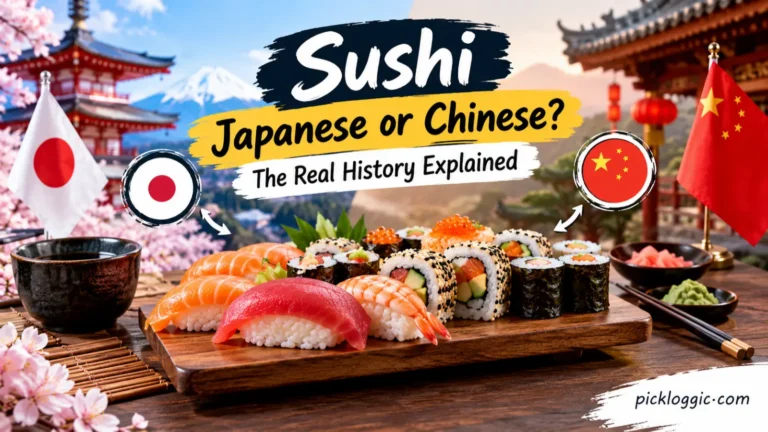
Is sushi Japanese or Chinese? Sushi is a traditional Japanese dish, but its history began with an older fish-preservation method from Southeast Asia. Over time, people developed this method in China and other parts of Asia before sushi became a famous part of Japanese food culture.
Today, sushi is known around the world for its vinegared rice, fresh ingredients, and careful preparation. Many people think sushi always contains raw fish, but that is not true. Some sushi varieties include cooked seafood, vegetables, or egg.
Understanding sushi’s origins helps explain the differences between Japanese and Chinese food. It also shows how food traditions change as people develop new recipes. In this guide, you will discover where sushi came from, how Japan transformed it, and how sushi compares with Chinese dishes. You will also learn about popular sushi types, common mistakes, and simple tips for enjoying sushi.
Quick Summary:
- Sushi is Japanese: Modern sushi developed into its familiar form in Japan.
- Its early roots are older: Fish preservation methods similar to early sushi existed in parts of Southeast Asia and spread across Asia.
- Sushi uses seasoned rice: Vinegar-seasoned rice defines sushi, whether it contains raw fish, cooked seafood, or vegetables.
- Sushi does not always contain raw fish: Many varieties use cooked or plant-based ingredients.
- Chinese food is different: China has its own rich culinary traditions, including rice dishes, dumplings, and noodles.
- Sushi is popular worldwide: Restaurants now serve traditional Japanese styles and modern local creations.
What Is Sushi? Meaning and Definition
Sushi is a Japanese dish made with rice seasoned with vinegar, sugar, and salt. Cooks combine this rice with ingredients such as seafood, vegetables, or egg.
The word sushi relates to the sour taste of seasoned rice. However, modern sushi often has a mild, balanced flavor rather than a strong sour taste.
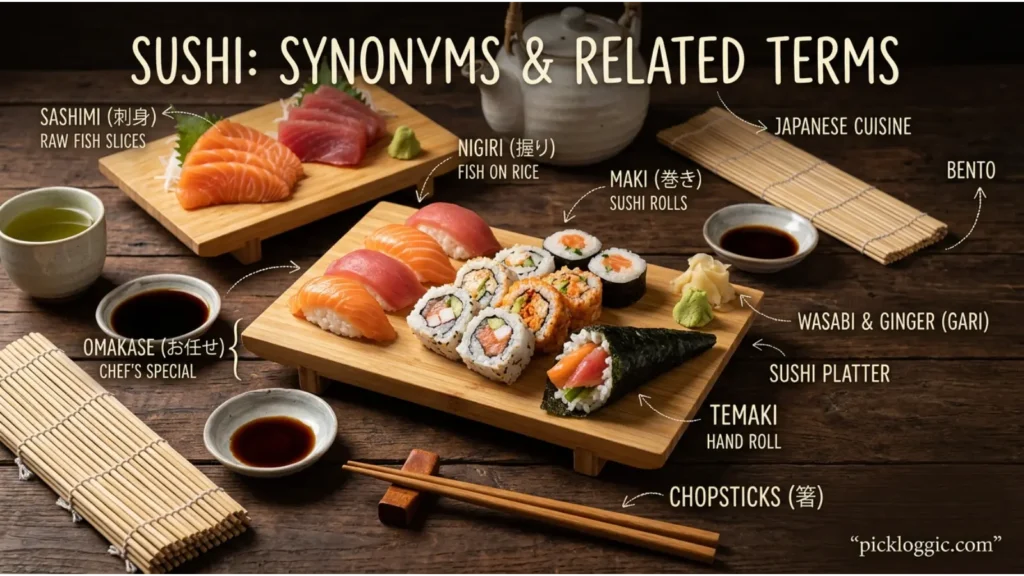
People often confuse sushi with sashimi. Sushi includes specially seasoned rice, while sashimi consists of thinly sliced fish or other seafood served without sushi rice.
Sushi can come in several forms. Some cooks shape it by hand, while others roll it in seaweed or arrange ingredients in a bowl.
For example, a salmon roll with vinegared rice and seaweed counts as sushi. A plate of sliced salmon without rice is sashimi.
Where Did Sushi Originate?
Sushi’s history involves several Asian food traditions, so its earliest roots require some explanation.
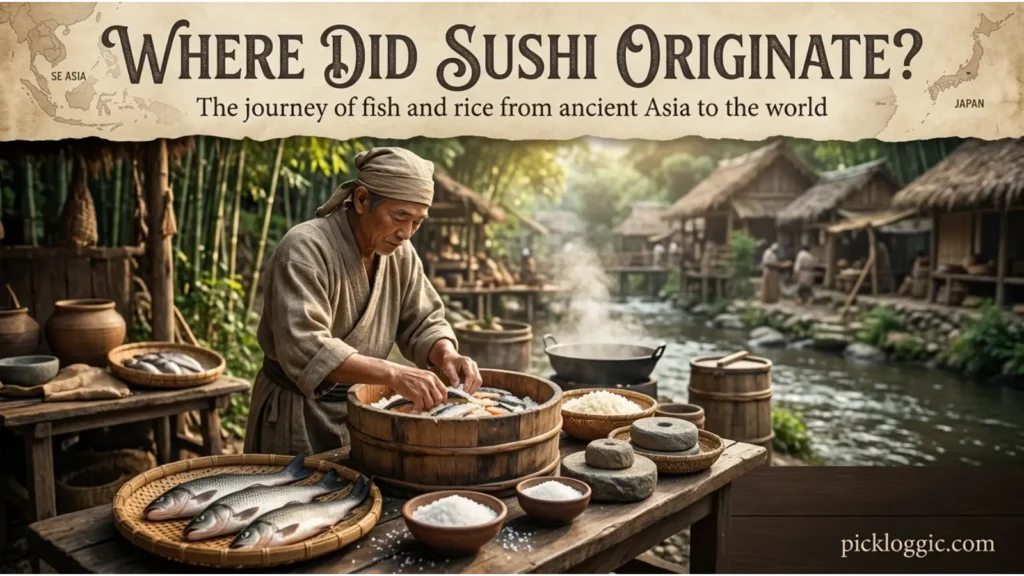
Before modern refrigeration, people needed ways to preserve fish. One method involved packing fish with cooked rice and allowing fermentation to preserve it.
Historians commonly associate early forms of fermented fish and rice with Southeast Asia. This preservation practice spread through parts of Asia and became established in Japan.
Early Japanese sushi differed greatly from the sushi served today. People often ate the preserved fish and discarded the fermented rice.
Over time, Japanese cooks changed the process. They began using rice vinegar to create a sour flavor without waiting for long fermentation periods.
These changes helped sushi develop into a dish featuring both seasoned rice and other ingredients.
Therefore, sushi’s early history connects to broader Asian food traditions, but the sushi most people recognize today developed in Japan.
How Did Sushi Become a Japanese Dish?
Japan played the central role in shaping sushi into its modern form.
During earlier periods, Japanese communities used fermented fish as a way to preserve food. Over the centuries, cooks developed faster preparation methods and new combinations of rice and seafood.
By the Edo period, which lasted from 1603 to 1868, a faster style of sushi began to emerge. Cooks used vinegar-seasoned rice instead of relying entirely on lengthy fermentation.
In the early nineteenth century, Tokyo, then known as Edo, became associated with nigiri sushi. This style features a small mound of seasoned rice topped with fish or another ingredient.
Nigiri suited busy city life because cooks could prepare it quickly and customers could eat it easily.
Later, refrigeration, transportation, and international travel helped sushi spread beyond Japan.
Today, sushi remains an important part of Japanese cuisine, although restaurants around the world have introduced their own variations.
Is Sushi Chinese in Origin?
Sushi is not generally classified as a Chinese dish. However, its early history connects with fish-preservation traditions found across Asia.
Some ancient methods used fermented rice to preserve fish. Similar practices developed and spread through different regions long before modern sushi became popular.
This shared history sometimes causes confusion about sushi’s national origin.
It is important to distinguish between the history of a food-preservation technique and the development of a modern dish. Several cultures can contribute to a culinary tradition without making the finished dish exclusively theirs.
Chinese cuisine has its own long history of preparing rice, seafood, vegetables, and fermented foods. Yet modern sushi, including nigiri and maki rolls, is closely associated with Japan.
The simplest answer is that sushi’s early roots are part of a wider Asian history, while modern sushi is Japanese.
Japanese Sushi vs. Chinese Food: Key Differences
Japanese and Chinese cuisines both offer rice, seafood, vegetables, and many regional specialties. However, their cooking methods, flavors, and traditional dishes often differ.
| Feature | Japanese Sushi | Traditional Chinese Food |
|---|---|---|
| Origin | Modern sushi developed in Japan | Developed across many regions of China |
| Main ingredients | Vinegar-seasoned rice and varied toppings | Rice, noodles, vegetables, meat, and seafood |
| Common preparation | Rolling, hand-shaping, or arranging ingredients | Stir-frying, steaming, braising, boiling, and other methods |
| Common flavors | Often balanced, delicate, and lightly seasoned | Varies widely by region, from mild to spicy and savory |
| Popular examples | Nigiri, maki, temaki, and chirashi | Dumplings, fried rice, noodles, and regional specialties |
| Raw seafood | Used in some varieties | Also appears in certain Chinese culinary traditions, but varies by dish and region |
| Typical serving style | Individual pieces, rolls, or bowls | Shared dishes, individual portions, or both |
These differences are general rather than absolute. Both countries have diverse regional cuisines, and many dishes share ingredients or techniques.
For example, Japanese sushi may contain cooked shrimp, while Chinese cuisine includes many rice-based dishes that have no connection to sushi.
What Is the Difference Between Sushi and Sashimi?
Sushi and sashimi often appear together on Japanese restaurant menus, but they are different foods.
Sushi contains rice seasoned with vinegar. It may include raw fish, cooked seafood, vegetables, egg, or other toppings.
Sashimi consists of carefully cut pieces of fish or seafood served without sushi rice. Chefs select suitable ingredients and prepare them with attention to freshness and texture.
Consider a restaurant order containing salmon nigiri and salmon sashimi. The nigiri combines salmon with seasoned rice, while the sashimi contains salmon alone.
This distinction matters because many people assume every Japanese raw-fish dish is sushi.
Remember this simple rule: sushi includes seasoned rice, while sashimi does not.
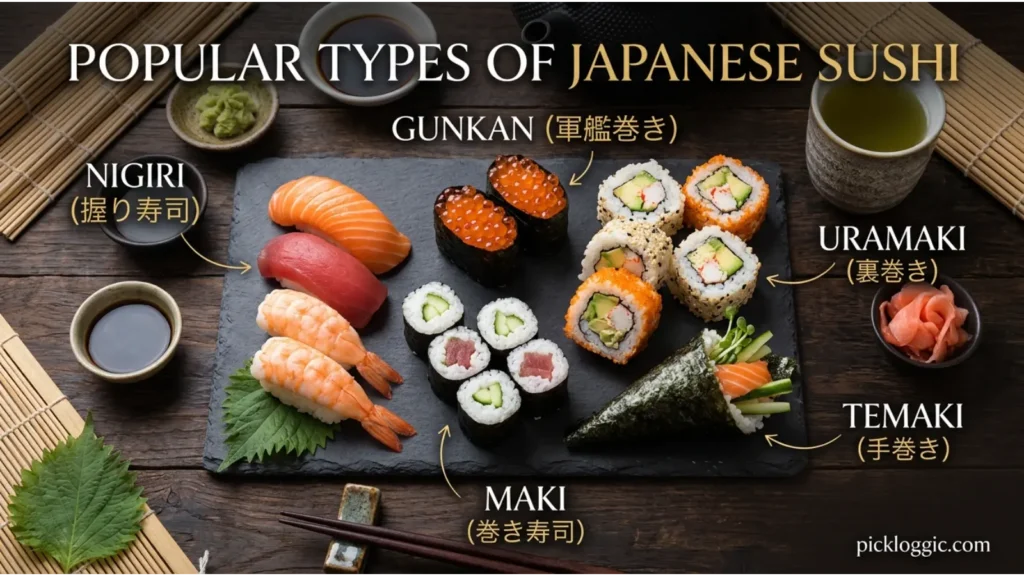
Popular Types of Japanese Sushi
Japanese sushi comes in several forms. Each type offers a different texture, shape, and way to enjoy its ingredients.
Nigiri Sushi
Nigiri consists of a small mound of seasoned rice topped with an ingredient such as salmon, tuna, shrimp, or egg.
Cooks shape the rice by hand and add the topping. Some varieties include a small amount of wasabi between the rice and topping.
Maki Sushi
Maki refers to sushi rolls made by wrapping rice and fillings in nori, a type of dried seaweed.
Popular fillings include cucumber, avocado, cooked shrimp, and fish. Restaurants often cut the roll into bite-sized pieces.
Temaki Sushi
Temaki is hand-rolled sushi shaped like a cone. It usually contains rice, seaweed, seafood, and vegetables.
People commonly eat temaki with their hands because of its shape.
Chirashi Sushi
Chirashi means scattered sushi. It features seasoned rice served in a bowl with toppings arranged over it.
The toppings may include fish, vegetables, egg, and other ingredients. This style provides variety without requiring individual rolls.
Inari Sushi
Inari sushi consists of seasoned rice placed inside a pouch of seasoned fried tofu.
It usually contains no fish, making it a useful option for people who prefer a seafood-free variety. However, ingredients and preparation methods can vary.
Does Sushi Always Contain Raw Fish?
No. Sushi does not always contain raw fish.
The defining ingredient is vinegar-seasoned rice, not raw seafood. Many popular sushi varieties use cooked ingredients or vegetables.
Examples include:
- California rolls: Often contain imitation crab, avocado, and cucumber.
- Cooked shrimp rolls: Use cooked shrimp with rice and other fillings.
- Eel sushi: Commonly uses cooked eel with a sweet-savory sauce.
- Vegetable rolls: May contain cucumber, avocado, carrots, or pickled vegetables.
- Tamago nigiri: Features Japanese-style sweet omelet over seasoned rice.
- Inari sushi: Contains rice inside a seasoned tofu pouch.
Always check the ingredients when ordering. Restaurant recipes can differ, and sauces or fillings may contain unexpected ingredients.
If you avoid raw seafood, ask the restaurant which options use fully cooked ingredients.
Real-Life Examples: How to Recognize Sushi
You can identify sushi more easily by looking at the rice, preparation, and ingredients.
Example 1: Salmon nigiri
A chef places a slice of salmon on a small mound of vinegar-seasoned rice. This is sushi because the fish sits on seasoned rice.
Example 2: Cucumber maki
A cook rolls seasoned rice and cucumber inside seaweed. The finished roll is sushi, even though it contains no fish.
Example 3: Salmon sashimi
A chef serves thin slices of salmon without rice. This is sashimi, not sushi.
Example 4: Chinese fried rice
A cook stir-fries rice with vegetables, egg, or meat. This is a Chinese-style rice dish, not sushi.
Example 5: A sushi bowl
A bowl contains seasoned rice, vegetables, and seafood arranged on top. Depending on its ingredients and preparation, it may be chirashi sushi or a modern sushi bowl.
These examples show why the presence of rice alone does not make a dish sushi.
Common Mistakes People Make About Sushi
Several common misunderstandings make sushi’s history and ingredients confusing.
Mistake 1: Calling Sushi Chinese
Some people associate sushi with China because early fish-preservation practices spread across Asia. However, modern sushi developed as a Japanese culinary tradition.
Mistake 2: Thinking All Sushi Contains Raw Fish
Many sushi varieties contain cooked seafood, egg, tofu, or vegetables. Always check the ingredients instead of assuming every piece contains raw fish.
Mistake 3: Confusing Sushi With Sashimi
Sushi includes vinegar-seasoned rice. Sashimi does not. This simple difference helps you identify each dish.
Mistake 4: Assuming All Japanese Food Is Sushi
Japanese cuisine includes ramen, tempura, udon, soba, curry, and many other dishes. Sushi is only one part of a much larger food tradition.
Mistake 5: Believing Every Sushi Roll Is Traditional
Modern restaurants create fusion rolls with cream cheese, spicy mayonnaise, and other ingredients. These can be delicious, but not every combination represents a traditional Japanese style.
Tips for Ordering and Enjoying Sushi
Sushi japanese or chinese you are new to sushi, a few simple tips can make your first experience easier.
- Start with familiar flavors: Try cucumber rolls, cooked shrimp rolls, or tamago nigiri.
- Check the ingredients: Ask whether the seafood is raw, cooked, or imitation seafood.
- Choose a reliable restaurant: Look for good hygiene and proper food handling, especially when ordering raw seafood.
- Try different styles: Compare nigiri, maki, and temaki to discover which texture you prefer.
- Use sauces carefully: Soy sauce can add flavor, but a small amount often works well.
- Ask about dietary needs: Some sauces contain allergens, and vegetarian options may include fish-based ingredients.
- Eat promptly: Follow the restaurant’s storage and serving guidance, particularly for seafood and rice.
For food safety, choose reputable restaurants that keep seafood properly chilled. People at higher risk from foodborne illness should avoid raw or undercooked seafood.
Sushi Synonyms and Related Search Terms
People use several related phrases when searching for sushi’s history, meaning, and origin.
- Is sushi Japanese or Chinese?
- Sushi origin and history
- Where did sushi originate?
- Is sushi a Japanese food?
- Japanese sushi history
- Traditional Japanese sushi
- Chinese food vs. Japanese food
- Sushi ingredients and preparation
- Types of Japanese sushi
- Sushi vs. sashimi
- Does sushi contain raw fish?
- Traditional Asian fish preservation
These phrases address related questions, but they do not all mean the same thing. For example, sushi’s origin concerns its historical development, while sushi ingredients describe how people prepare it today.
Expert Insights: Why Sushi’s Origin Matters
Understanding sushi’s history helps you appreciate the cultural traditions behind familiar foods.
First, food traditions often develop through cultural exchange. An early preservation technique may travel between regions before cooks transform it into a distinct dish.
Second, historical origins and modern identity are not always identical. Sushi’s early roots connect with wider Asian practices, but Japan shaped the dish into the recognizable forms served today.
Third, ingredient knowledge helps consumers make better choices. Knowing that sushi requires seasoned rice makes it easier to distinguish sushi from sashimi and other seafood dishes.
Finally, cultural context encourages more accurate food writing. Instead of claiming that one country invented every early technique, it is better to explain the difference between ancient preservation methods and modern sushi.
For readers researching sushi, reliable historical references and reputable Japanese culinary sources can provide more detail about its development.
FAQs:
Is sushi Japanese or Chinese?
Sushi is Japanese in its modern form. Its early roots connect to older fish-preservation methods found in parts of Asia.
Did sushi originate in Japan?
Modern sushi developed in Japan, but its earliest historical roots involve fish-preservation traditions that existed elsewhere in Asia.
Was sushi invented in China?
There is no simple basis for saying modern sushi was invented in China. Early fermented-fish traditions influenced the broader history, while recognizable sushi developed in Japan.
Is sushi popular in China?
Yes. Sushi is available in many Chinese cities, where restaurants serve Japanese-style sushi and local variations.
Is sushi healthy?
Sushi can provide protein, carbohydrates, and other nutrients. Its nutritional value depends on the ingredients, portion size, sauces, and preparation method.
Can you eat sushi without raw fish?
Yes. Vegetable rolls, cooked shrimp rolls, eel sushi, tamago nigiri, and inari sushi are common examples.
What is the difference between sushi and sashimi?
Sushi includes vinegar-seasoned rice, while sashimi consists of sliced fish or seafood served without sushi rice.
Why is sushi considered Japanese food?
Japan developed many recognizable sushi styles, including nigiri and maki. These forms became important parts of Japanese food culture and later spread worldwide.
Conclusion
So, is sushi Japanese or Chinese? The clearest answer is that modern sushi is Japanese, although its early history connects to older fish-preservation traditions across Asia.
Over time, Japanese cooks transformed those practices into a distinctive food tradition. They developed vinegar-seasoned rice, created different sushi styles, and helped make sushi popular around the world.
Today, sushi comes in many forms, including nigiri, maki, temaki, and chirashi. Some varieties contain raw fish, while others use cooked seafood, egg, tofu, or vegetables.
It is also important to remember that sushi differs from sashimi and Chinese rice dishes. Sushi depends on seasoned rice, while sashimi does not contain rice.