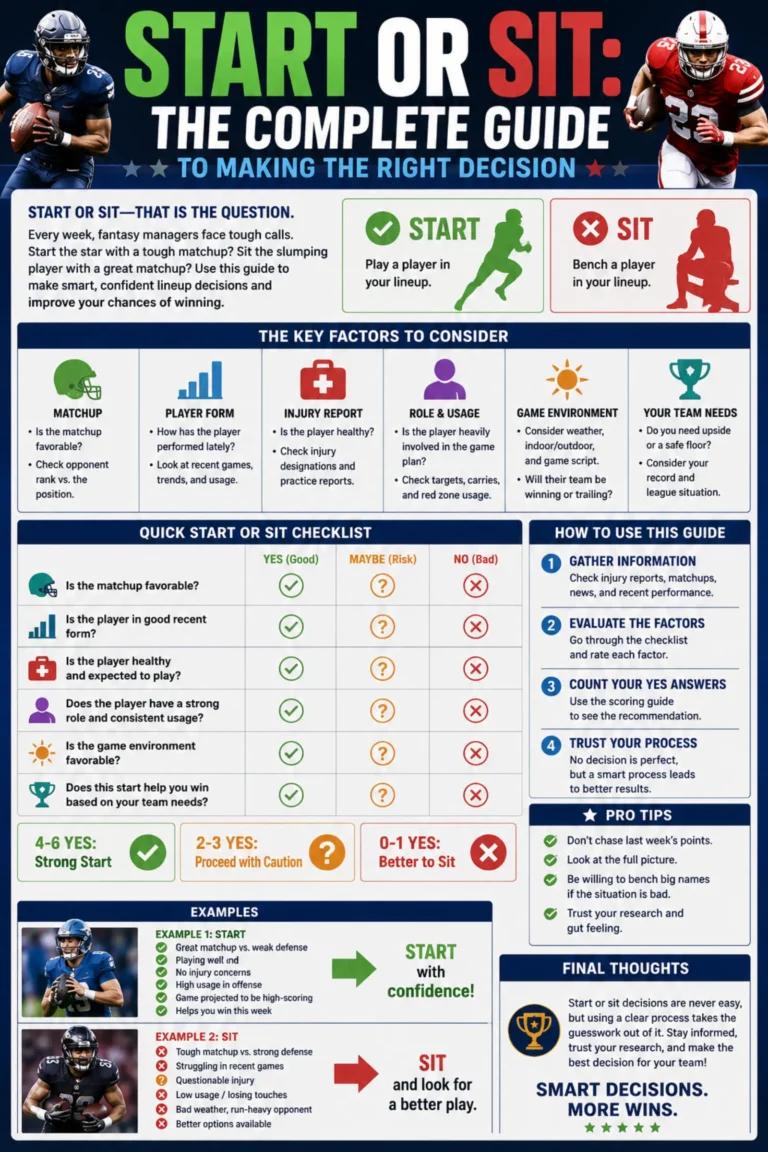
Start or sit is a common phrase used when making a choice between using someone or leaving them out. You often hear it in fantasy sports, school teams, and daily life. The decision can affect your results. That is why many people search for the best way to choose between start or sit.
This guide explains the meaning in simple words. It also shows real examples, common mistakes, and expert tips. You will learn how to make smarter decisions with confidence. Whether you play fantasy football or make everyday choices, this article will help you understand the idea clearly.
Quick Summary
Featured Snippet Answer
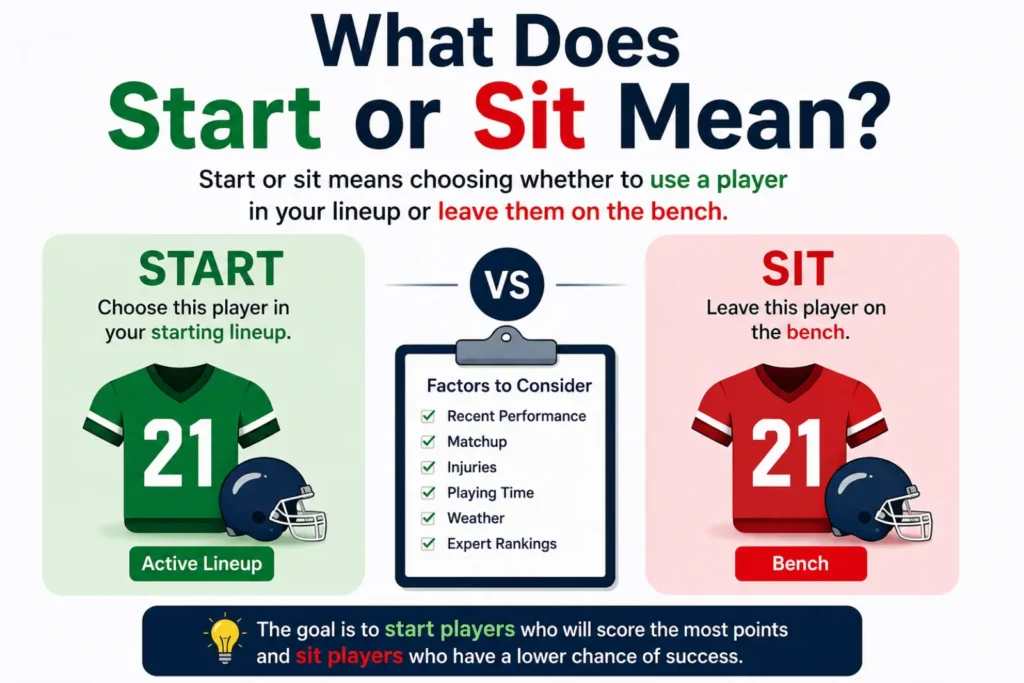
- Start or sit means choosing whether to use someone or leave them out.
- The phrase is most common in fantasy sports.
- A “start” means placing a player in your active lineup.
- A “sit” means leaving a player on the bench.
- The best decision depends on performance, matchup, injuries, and opportunity.
- The same idea also applies to everyday decision-making.
What Does Start or Sit Mean?
The phrase start or sit means making a decision between two options.
- Start means use someone.
- Sit means do not use them right now.
Most people use this phrase in fantasy football. Managers decide which players should play during a game week.
However, the idea works in many situations.
For example:
- Start a skilled employee on an important project.
- Sit a player who has an injury.
- Start your strongest speaker during a presentation.
- Sit someone who needs more practice.
The decision always depends on the situation.
Why Is the Start or Sit Decision Important?
Every decision has an outcome.
A good start or sit choice can improve your success.
For example:
- Fantasy sports teams score more points.
- Coaches improve team performance.
- Managers assign work wisely.
- Teachers select students for competitions.
Small decisions often create big results.
Start vs Sit Comparison
| Feature | Start | Sit |
|---|---|---|
| Meaning | Use the player or person | Leave them out |
| Goal | Gain better performance | Avoid poor performance |
| Fantasy Sports | Active lineup | Bench |
| Risk | Player may underperform | Player may perform well on the bench |
| Best Time | Favorable matchup | Tough matchup or injury concern |
How to Decide Between Start or Sit
Making the right choice becomes easier when you follow a simple process.
1. Check Recent Performance
Look at recent results.
Has the player performed well?
Recent form often predicts future success.
2. Study the Matchup
Some opponents are easier than others.
For example:
A running back facing a weak defense has a better chance to score.
Matchups matter.
3. Watch Injury Reports
Never ignore injuries.
Even minor injuries can reduce performance.
Always check the latest updates before deciding.
4. Consider Playing Time
A talented player needs opportunities.
More playing time usually means more chances to produce points.
5. Review Expert Rankings
Experts analyze statistics every week.
Their advice can help you avoid mistakes.
Still, make your own final decision.
Real-Life Examples of Start or Sit
Fantasy Football Example
Player A has scored 20 points in three straight games.
Player B faces the strongest defense.
The better choice is to start Player A.
School Team Example
Two students want to join the debate.
One has practiced every day.
The other missed several sessions.
The coach starts the prepared student.
Workplace Example
A manager must choose a presenter.
One employee has strong presentation skills.
The other has little experience.
The manager starts the experienced employee.
Factors That Affect Start or Sit Decisions
Many factors influence the final choice.
Recent Form
Players in good form often continue performing well.
Opponent Strength
Weak opponents usually create better opportunities.
Weather
Bad weather can reduce passing success.
Injuries
Healthy players are safer choices.
Coaching Decisions
Sometimes coaches reduce playing time.
Always watch team news.
Common Start or Sit Mistakes
Many beginners make similar mistakes.
Ignoring Matchups
Talent alone does not guarantee success.
Always check the opponent.
Trusting Big Names
Star players can have bad weeks.
Look beyond reputation.
Forgetting Injury News
Last-minute injuries happen often.
Stay updated.
Following One Opinion
Read multiple expert opinions.
Compare different viewpoints.
Chasing Last Week’s Points
One great game does not predict every future game.
Focus on trends.
Tips for Better Start or Sit Decisions
Use these simple tips.
- Check player news daily.
- Compare recent statistics.
- Study defensive rankings.
- Follow injury updates.
- Think long term.
- Stay consistent.
- Avoid emotional decisions.
- Trust reliable data.
Small improvements lead to better results.
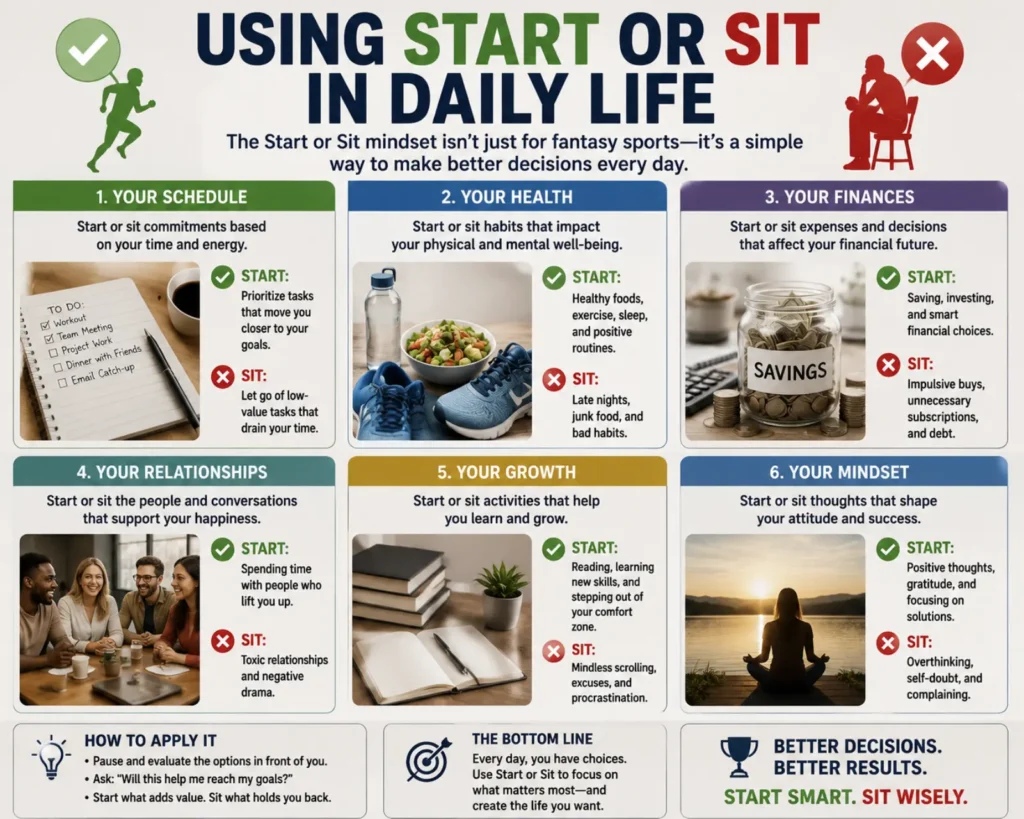
Using Start or Sit in Daily Life
The phrase is useful outside sports.
Examples include:
Business
Choose the best employee for a project.
Education
Select students based on preparation.
Family
Decide who should handle an important task.
Personal Goals
Choose habits that improve your success.
The same thinking applies everywhere.
Synonyms and Related Keywords
These related terms help explain start or sit naturally.
Synonyms
- Active or bench
- Play or rest
- Use or reserve
- Select or leave out
- Choose or skip
Related Search Terms
- start or sit advice
- start or sit fantasy football
- weekly start or sit picks
- who should I start
- fantasy lineup decisions
- fantasy football rankings
- player matchup analysis
- fantasy football tips
- best lineup strategy
- fantasy football sleeper picks
Expert Insights
Experienced fantasy managers rarely make decisions based on one statistic.
Instead, they combine several factors.
They review:
- Matchups
- Injuries
- Team strategy
- Player trends
- Weather
- Expected workload
This balanced approach improves long-term success.
Experts also avoid emotional decisions.
Consistency beats guessing.
Start or Sit Strategy Checklist
Before making your decision, ask yourself:
- Is the player healthy?
- Is the matchup favorable?
- Has recent performance been strong?
- Will the player receive enough opportunities?
- Do multiple experts agree?
- Does the data support the decision?
If most answers are “yes,” starting the player makes sense.
Why Start or Sit Matters in Fantasy Football
Fantasy football rewards smart decisions.
Even small lineup changes can decide weekly matchups.
Successful managers:
- Research regularly.
- Watch injury reports.
- Study defensive matchups.
- Think ahead.
Winning usually comes from better decisions, not luck.
Frequently Asked Questions
What does start or sit mean?
It means deciding whether to use someone or leave them out.
Where is the phrase start or sit most common?
It is most popular in fantasy football and other fantasy sports.
How do I make a good start or sit decision?
Check recent performance, injuries, matchups, and playing time.
Should I always trust expert rankings?
No. Expert advice helps, but your own research also matters.
Does weather affect start or sit decisions?
Yes. Rain, wind, and snow can change player performance.
Is recent performance more important than reputation?
Usually yes. Current form often matters more than past success.
Can beginners learn start or sit strategies?
Yes. Following simple rules makes decisions much easier.
Conclusion
Understanding start or sit helps you make smarter decisions in fantasy sports and beyond. The choice may seem simple, but many factors influence the best answer. Recent performance, matchups, injuries, and playing time all matter. Looking at the full picture gives you a better chance of success than relying on one statistic or a player’s reputation.
The same decision-making process also works in school, work, and everyday life. By gathering information, comparing options, and thinking ahead, you can make more confident choices. The next time you face a start or sit decision, use the tips in this guide to improve your results and avoid common mistakes. Consistent, informed choices lead to better outcomes over time.